
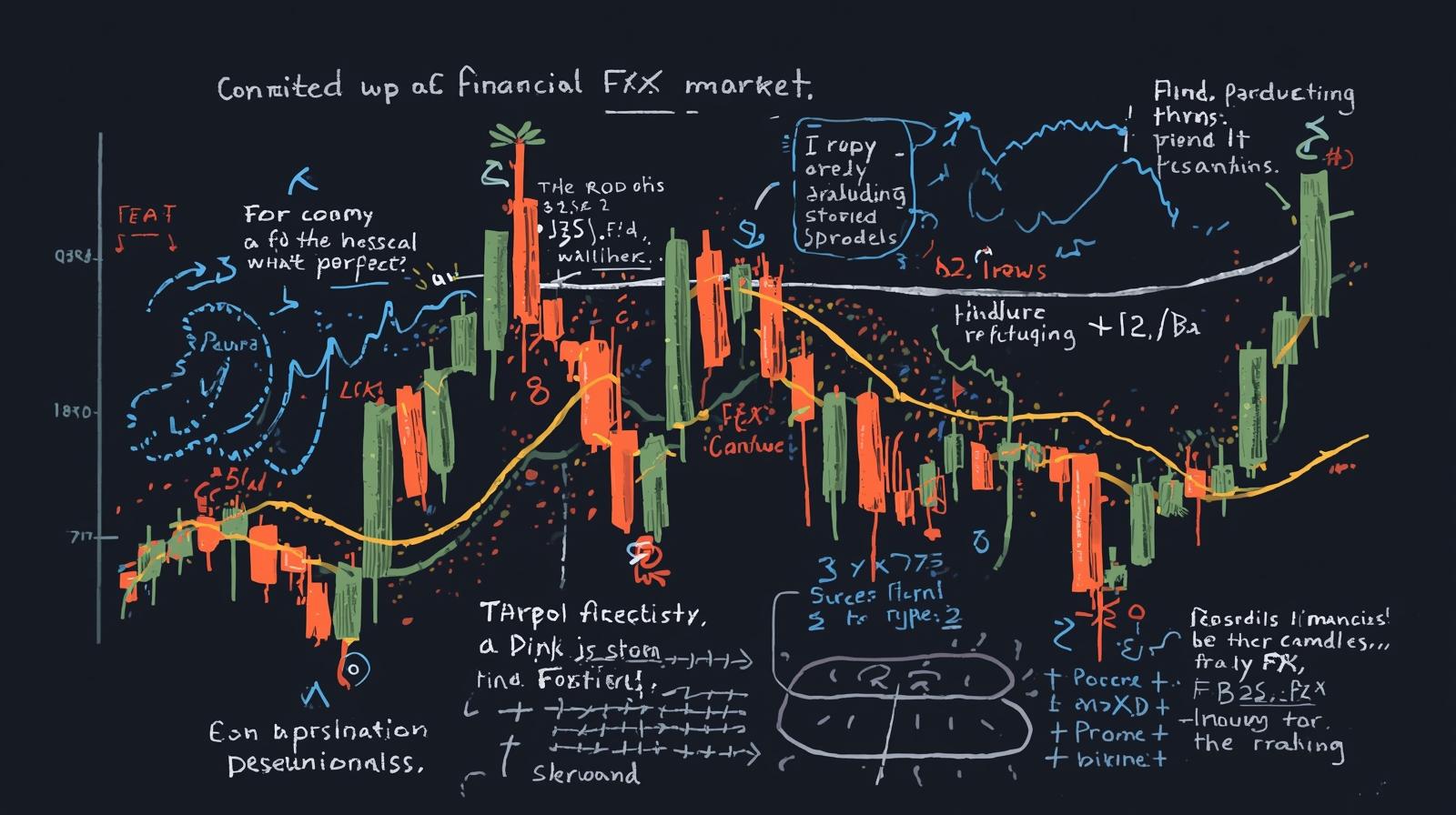
Detailed explanations are already well covered on FX companies’ websites and by people who know far more than I do. So I’ll leave the deep dives to them and just explain what FX basically is in simple terms.
FX Means “Foreign Exchange Margin Trading”
FX stands for “Foreign Exchange.” In Japanese, it’s called foreign exchange margin trading.
Sounds complicated, but what you’re actually doing is surprisingly simple.
In short, it’s like a game of buying and selling currencies.
You trade currencies like the dollar, yen, or euro and aim to profit from changes in exchange rates.
For example:
- Buy USD when 1 USD = 100 JPY
- Sell USD when 1 USD = 110 JPY
In this case, the 10-yen difference becomes your profit.
Of course, if the price moves the other way, you take a loss just as easily.
What Is Margin Trading? The Biggest Feature of FX
You can’t talk about FX without mentioning leverage (the principle of leverage).
This is both the appeal of FX—and the scariest part.
Here’s a simple image:
Your margin: ¥100,000
        ↓ Leverage 25x
You can control up to about ¥2,500,000 worth of currency
With a small amount of money, you can make large trades.
That’s why profits can grow quickly when things go well.
But when the market moves against you, losses also grow fast.
Take this lightly, and you’ll get burned very quickly.
(From personal experience.)
Main Advantages of FX
- Start with a small amount: Trading is possible with just tens of thousands of yen
- High capital efficiency with leverage
- 24-hour trading: The market is active almost all weekdays
- Swap points: Interest rate differences can accumulate daily
Especially for people who work during the day and trade at night,
the 24-hour market is a huge advantage.
Disadvantages and Risks of FX
On the other hand, there are risks you absolutely need to understand.
- Risk of major losses: Excessive leverage is genuinely dangerous
- Sudden market moves: Economic data and official statements can move prices instantly
- Swap reversal risk: Even high-interest currencies can crash after policy changes
It’s not unusual for losses to double just because you looked away for a moment.
FX is not an investment you can safely ignore.
Popular Currency Pairs
These are common currency pairs beginners often start with:
- USD/JPY: Very familiar for Japanese traders, with plenty of information available
- EUR/USD: The most traded currency pair in the world
- High-interest currencies (TRY/JPY, ZAR/JPY, MXN/JPY, etc.)
High-interest currencies look attractive because of swap points,
but their volatility is intense and they often become beginner traps.
FX Can Be Heaven or Hell—It All Depends on How You Use It
Used properly, FX can help you grow assets efficiently.
But with a little carelessness, your account can be wiped out overnight.
What really matters is:
- Proper margin management
- Not using excessive leverage
- Not trading based on emotions
I personally started FX thinking it would be “a little side income,”
and ended up blowing up my account spectacularly.
But because of that failure,
I truly learned the importance of building slowly and steadily.
For Those Thinking About Starting FX
If this article made you think, “Maybe I’ll give it a try,”
please be almost excessively cautious.
FX isn’t about hitting a jackpot in one trade.
It’s a game of finding a way to continue without breaking yourself.
I’m still learning myself.
Related Articles (Updated Regularly)
- Before I Knew It, I Had Stepped into FX
- The Time I Got Destroyed During a USD/JPY Economic Announcement
- Falling into Another Trap with High-Interest Currencies (Part 1)
- When High-Interest Currencies Hit Me with Reality (Part 2)
I’m not fluent in English, but I really wanted to share this story.
So I tried my best using translation tools to write this post.
If you find anything that sounds strange, unnatural, or offensive,
please let me know in the comments.
I’ll check it carefully, translate your feedback, and fix it.
Thank you for reading!


コメント