
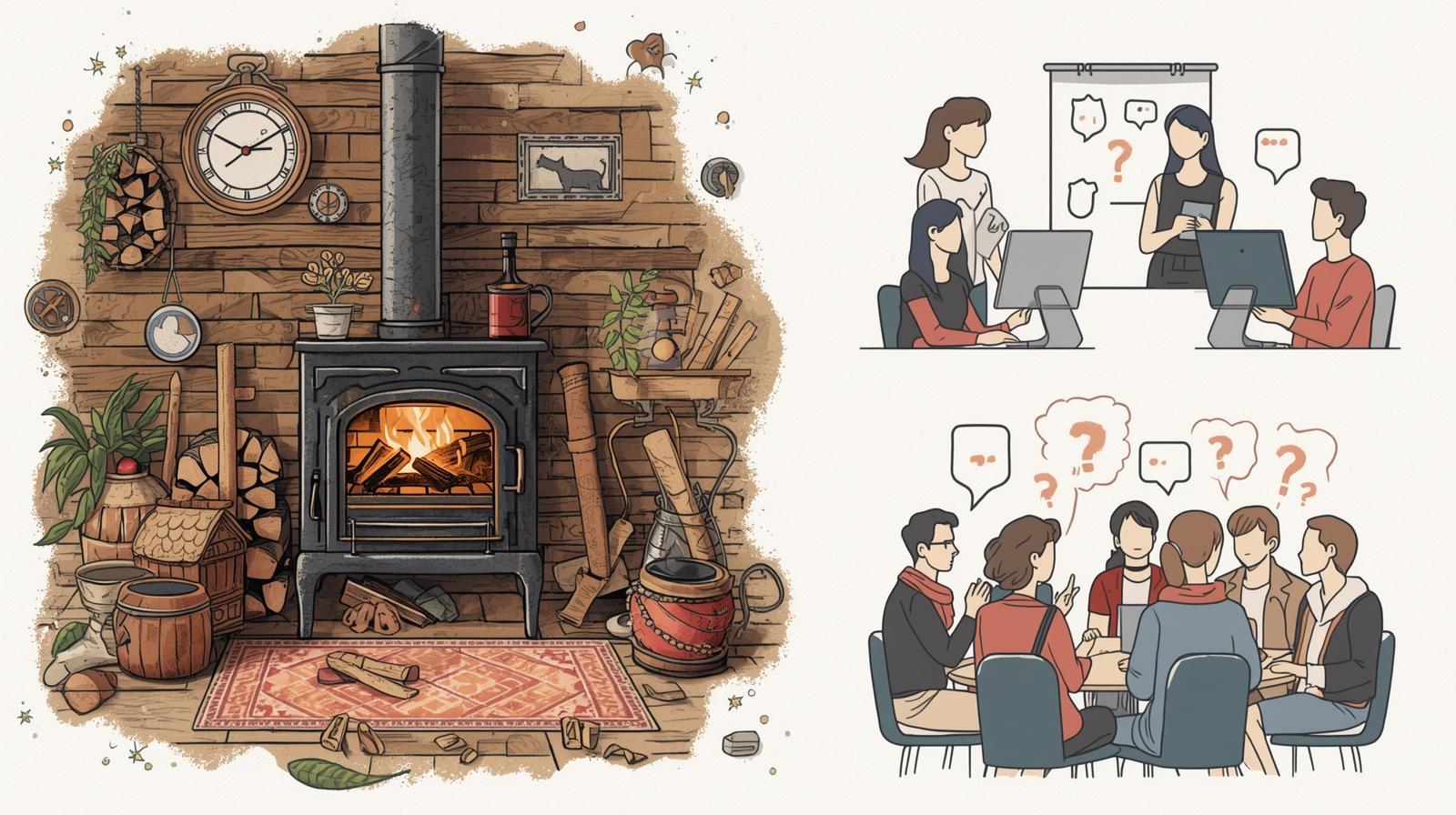
Q&A: What Wood Stove Beginners Always Wonder About
Once you start using a wood stove, a parade of tiny mysteries marches into your life. “Wait… is this normal?” “Should it be doing that?” Seven years into wood-stove living, Johnny has gathered the things he *really* wishes he had known at the beginning.
If you’re thinking about getting a stove, or you’ve just fired up your first one, I hope this helps you avoid at least a few “Why is this happening?” moments.
0. The One Question Everyone Asks First
Q. Is it warmer than an air conditioner?
Short answer: Yes. Long answer: **Absolutely yes**. A wood stove warms you in that gentle, radiant way that feels like someone wrapped the entire room in a heated blanket designed by wizards.
Q. Does it heat the whole house?
Depends on your floor plan and whether you have an open layout. But in many homes, the living room becomes the unofficial warm oasis, and heat naturally drifts up to the second floor like a sleepy cat climbing stairs.
Q. Is using it every day a lot of work?
There’s a bit of effort involved: prepping wood, lighting the fire, managing ash. But once you get used to it, the routine becomes part of the charm. If you like outdoor activities or campfires, you’re already halfway qualified.
1. Lighting the Fire
Q. What should I use for kindling?
Thin softwood sticks, chopsticks, scrap wood, dry twigs. Even milk cartons or pinecones make great assistants. Newspapers work too, but the ink can fog up the glass, so go easy unless you like artistic smoke patterns.
Q. Do I need fire starters?
If you’re a beginner: absolutely recommended. They turn “Why won’t this burn?” into “Oh look, fire!”
Q. Why is it hard to start a fire sometimes?
- The wood is still wet.
- You didn’t use enough kindling.
- You started with logs that belong in a boss battle.
- The chimney isn’t warm yet.
- Warm outside air is pushing smoke back down the chimney like an unwelcome surprise.
2. All About Firewood
Q. What kind of firewood is best?
Well-seasoned hardwood (oak, chestnut, etc.) Burns long, burns steady, burns beautifully.
Q. Can I use softwood?
Yes. Great for kindling because it ignites fast and burns hot. But it disappears quickly, so don’t rely on it as your main fuel.
That said… Johnny pretty much burns anything that was once a tree.
Hardwood is ideal, but dryness is king. If it’s dry, it burns. If it’s wet, it sulks.
Q. Where can I get firewood?
- Home centers
- Firewood suppliers
- Forest cooperatives
- Local government tree disposal programs
- Construction sites with leftover solid wood
- Ask pruning/landscaping workers
- Firewood groups on social media
Just watch out for plywood or anything with glue.
Your stove is not a chemistry experiment.
Q. Can I burn plywood or construction scraps?
Nope. Glue, paint, chemicals — all bad for your chimney and your lungs. Johnny sometimes chops them up for BBQ fuel instead.
Q. How long should firewood dry?
At least 1–2 years. Aim for **20% moisture or less**. Wet wood creates smoke, creosote, and sad chimneys.
Johnny used to measure moisture but eventually stopped because experience became the new moisture meter.
Q. How much firewood do I need for one season?
Usually **2–4 cubic meters** for daily use. Johnny personally collects as much as he can whenever he can, because storage is limited and hardwood isn’t always easy to find.
The first two or three years are the hardest — waiting for wood to dry is basically the slowest hobby in the world.
3. Using the Stove
Q. When should I add more wood?
Gradually add larger pieces while the fire is settling. Once you’ve got glowing embers, add more depending on how warm you want the room. Johnny prefers adding wood **before** the stove becomes all embers — starting from nothing feels like trying to wake up on a cold Monday morning.
Just don’t overload it. More wood doesn’t equal more happiness.
Q. Why does the glass turn black?
- Wet wood. This is the reigning champion of glass dirtiness.
- Not enough airflow.
- Low burning temperature.
Wet wood is basically water pretending to be wood.
Q. What if the room gets too hot?
Reduce airflow, add less wood, or open interior doors to share the warmth with the rest of the house.
4. Maintenance Questions
Q. How often should I remove ash?
Daily or every few days. Leave a little behind — your next fire will thank you.
Q. How do I clean the glass?
Newspaper + a bit of ash + water = magic. Just don’t do it while the stove is hot unless you enjoy sizzling noises and regret.
Q. How often should I clean the chimney?
At least **once a year** after the season. Professionals cost about 150–300 USD. DIY is nearly free, except for the part where you question your life choices on the roof.
Q. What happens if I skip maintenance?
Creosote buildup leads to **chimney fires**. This is not the dramatic excitement anyone wants.
5. Safety
Q. Is it safe for kids or pets?
The stove and door get **ridiculously hot**. A guard fence keeps tiny hands and curious noses safe.
Q. What about carbon monoxide?
If installed properly, you’re fine. But having a CO detector adds peace of mind and removes unnecessary drama.
Q. Can I leave the house or sleep while it’s burning?
Never add wood and then leave or sleep. Make sure the fire is stable or reduced to embers before bedtime. It will naturally burn out while you dream.
6. A Common Morning Question
Q. How do I revive the fire in the morning?
If embers remain, add fine kindling and you’re back in business. If not, you’re starting from scratch — consider it your early morning meditation.
7. Cooking on a Wood Stove
Q. How hot does the top plate get?
Usually **200–350°C**, great for stews, roasted sweet potatoes, pizza, whatever you can think of. We often keep pots of water up there for humidifying — winter air gets dry enough to turn you into a raisin.
Q. Can I use a Dutch oven?
Absolutely. It’s basically the wood stove’s best friend.
8. Other Common Questions
Q. Why does smoke sometimes come back inside?
Warm outdoor temperatures, low pressure, or a cold chimney. Preheating the chimney with a fire starter or a burning milk carton helps create a clean upward airflow.
Q. Why do logs “pop” and throw sparks?
Moisture or trapped air inside the wood. Keep the glass door closed unless you enjoy unexpected mini fireworks.
Q. The indoor humidity is too low!
Place a kettle on top of the stove. We use old pots that retired from cooking duties.
Wood stoves can feel intimidating at first, but everything gets easier with experience.
Once it becomes part of your life, winter turns into something you genuinely look forward to.
👉Basic Wood Stove Comparisons
👉Notes and Costs for Installing a Wood Stove


コメント